
Why Skilled Workers Aren’t Applying to Your Jobs

You raised the pay rate. You rewrote the job post. You’re still getting five applicants for a welder role, and four of them can’t run a clean bead.
If that sounds familiar, you’re not imagining it, and you’re not doing anything obviously wrong. Something bigger is going on, and it’s not just a labor shortage.
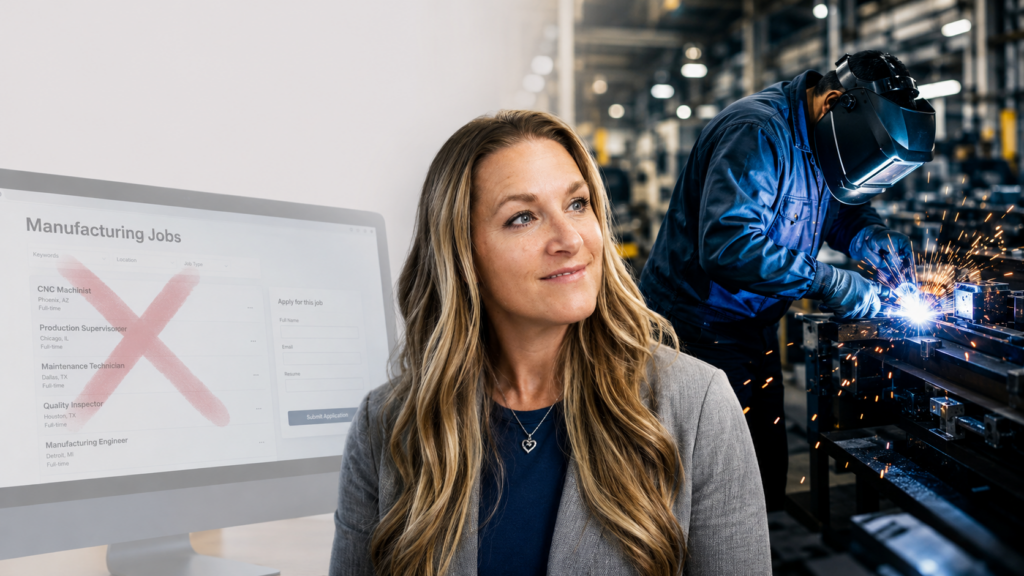
The Shortage Is Real, But That’s Not the Whole Story
The numbers back up what you’re feeling. The Bureau of Labor Statistics reported 7.6 million job openings in May 2026, but only 5.2 million hires that same month. That gap tells you something important: posting a job and filling a job have become two separate problems.
NFIB’s June 2026 survey of small business owners found 32% had job openings they couldn’t fill, and 51% of those actively hiring said they were getting few or no qualified applicants. Narrow that down to skilled roles specifically, and 27% of small businesses reported open positions they couldn’t staff.
Manufacturing shows the same pattern at a larger scale. The National Association of Manufacturers has estimated the industry may need to fill 3.8 million jobs over the next decade, with more than 1.9 million of those at risk of going unfilled if nothing changes. In the same report, 65% of manufacturers named attracting and retaining talent as their top business challenge…not supply chains, not equipment, not raw materials. People.
So yes, the shortage is real. But a shortage alone doesn’t explain why qualified people scroll past your job post without clicking.
Good Workers Are Often Already Employed
Here’s the piece that gets missed: the worker you actually want probably isn’t unemployed. A diesel tech with five years of experience, a machinist who knows your equipment, an experienced electrician — these people are usually already working somewhere. They’re not refreshing Indeed on a Tuesday night. They’re driving home from a shift.
That matters, because it means job boards only reach one segment of the labor market: people who are actively, currently searching. If your hiring strategy stops at “post the job and wait,” you’re fishing in a small pond made up mostly of people between jobs or unhappy enough to be looking right now. That’s not where your best-fit candidates are.
Job Posts Don’t Build Enough Trust
A job post is a list of requirements and a wage. It tells a stranger what you need. It does almost nothing to help that stranger trust you.
Glassdoor’s research found that 75% of job seekers are more likely to apply to a company that actively manages its employer brand. Trust isn’t a soft metric here, it’s the thing standing between a qualified worker and an application. Someone deciding whether to leave a stable job for yours wants to know what the shop actually looks like, who they’d report to, what the schedule really is, and whether the equipment is decent. A bullet-point job description answers none of that.
Workers Want to See the Real Job Before They Apply
This is where the data gets specific enough to act on. Lighthouse Research studied what kind of video content actually moves candidates, and the results were clear: candidates wanted hiring manager videos 2.5 times more than polished company overview videos. Not the corporate montage, but the manager, on camera, talking about the actual job.
The impact wasn’t marginal. Candidates who saw a hiring manager welcome video were 46% more likely to consider the job, and 30% more likely to respond or apply. That’s the difference between a job post that gets scrolled past and one that gets a reply.
It makes sense once you think about it from the worker’s side. A video answers the questions a job post can’t: What’s this person like to work for? What does a normal day actually look like? Is this a place I’d want to show up to at 6 a.m.?
A Simple Video System Can Attract Better-Fit Applicants
None of this requires a production budget or a marketing team. The employers getting traction with this aren’t the ones with the slickest videos, they’re the ones being consistent and specific.
A practical starting point:
- Film the hiring manager, not a spokesperson. Ninety seconds of the shop foreman or ops manager explaining the role, the shift, and who they’re looking for beats a scripted HR video every time.
- Show the actual work environment. The shop floor, the truck, the tools, the crew — let people see it before they apply, not after they’re hired.
- Answer the objections up front. Pay range, schedule, safety record, growth path. If workers have to guess, they’ll assume the worst and move on.
- Post it everywhere the job ad already lives. Job boards, LinkedIn, your careers page, even attached to the application itself.
None of this replaces job boards outright. It changes what happens before someone ever gets to the board — or instead of it, for the workers who were never going to look there in the first place.
The Real Question to Ask
Before you write another job post, ask a different question: can the right worker actually see why they should choose you? Not read about it in a bullet list — see it, hear it from a real person, and trust it enough to take the next step.
You don’t need to go viral to attract better applicants. You need a clear, repeatable system that helps the right workers see you, trust you, and act.
Want a step-by-step framework for building that system? Download The Workforce Attraction Blueprint.
